Expert Advice from Rebecca Baxt, MD
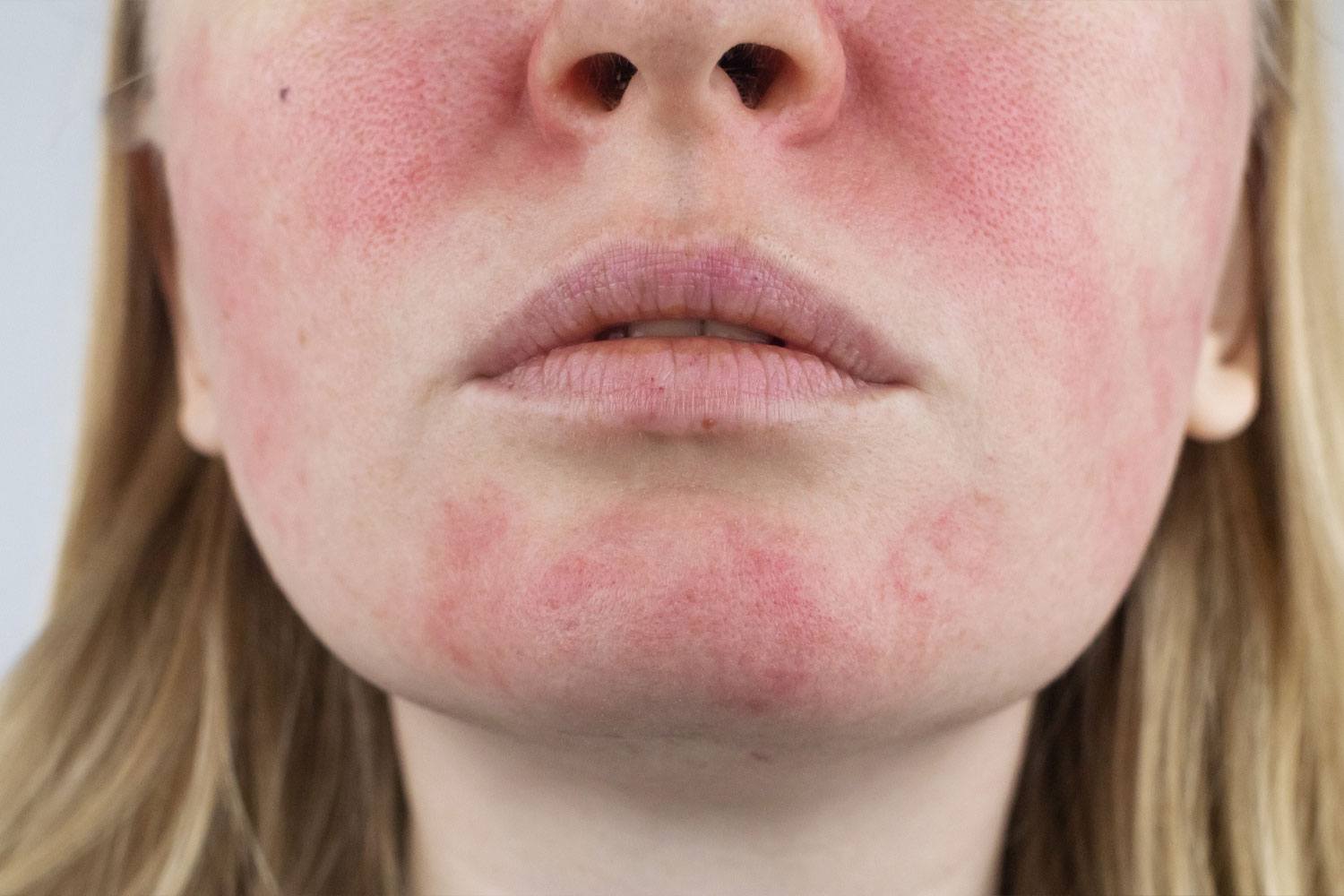
If you are one of the more than 16 million Americans diagnosed with rosacea, there are new options available to help manage the skin condition. Every April, the National Rosacea Society (NRS) designates Rosacea Awareness Month to educate men and women who experience persistent facial redness, increased facial flushing, or acne-like bumps.
The goal is to help people better understand this chronic skin condition and encourage them to seek an accurate diagnosis and appropriate treatment from a board-certified dermatologist. Effective options exist to help treat symptoms, manage flare-ups, and reduce the likelihood of future outbreaks.
At BAXT CosMedical®, Dr. Rebecca Baxt, a board-certified dermatologist, has been treating rosacea for over 25 years. “Unfortunately, many of my rosacea patients have been struggling with this chronic condition for many years with inadequate symptom control,” says Dr. Baxt. “If the condition is not appropriately treated when symptoms are moderate, such as, flushing, redness, and skin irritation, the symptoms will increase in severity with visible blood vessels, skin thickening, pimples, burning and/or stinging.”
There is help! The first step is to schedule a consultation with Dr. Rebecca Baxt to discuss your symptoms and obtain an accurate diagnosis and customized treatment plan.
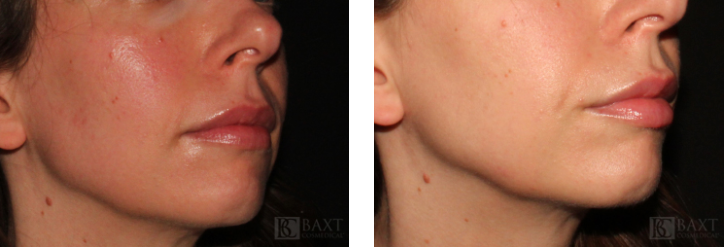
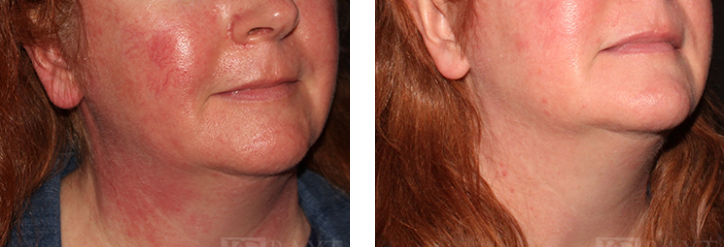
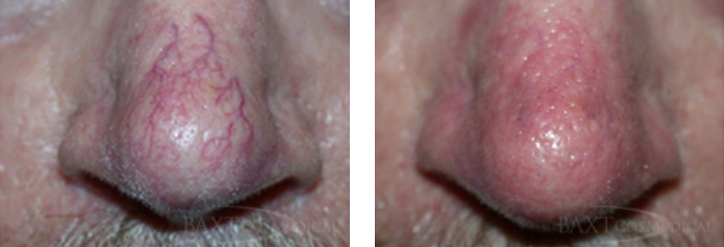
BAXT CosMedical® Rosacea Patient Results
What is Rosacea?
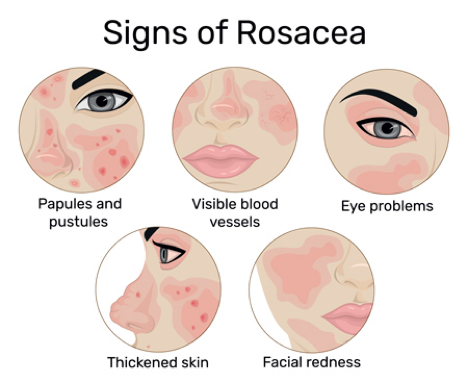
Rosacea is a chronic long-term inflammatory skin condition that doesn’t have a cure, but symptoms can be controlled and treated. Typically, patients present with the following symptoms:
- Frequent flushing and redness seen on the nose, cheeks, and chin
- Acne-like breakouts (e.g., pimples, pustules, cysts)
- Broken facial capillaries (spider veins) are present on the face or in the eyes
- Thickening of facial areas (most noticeable in the nose)
Rosacea patients have sensitive skin that is easily prone to irritation. While symptoms fluctuate, most individuals report that their condition can be triggered by sun exposure, eating spicy foods, or undergoing emotional stress.
How is Rosacea Treated?
Dr. Rebecca Baxt sees many rosacea patients who have not been seen by a dermatologist or who have not had a customized treatment plan that includes symptom maintenance/prevention and a good skin routine to optimize results.
Dependent upon the symptoms, rosacea can be treated medically and/or with laser/light devices. After your consultation with Dr. Baxt, and based on your symptoms, she may initially prescribe well-known and clinically proven topical medications that act as a vasoconstrictor to the blood vessels, including; Mirvaso®, Rhofade, Metrolotion gel/cream, Ivermectin, sulfur lotions and oral antibiotics, such as doxycycline.
For rosacea patients who want to address redness and flushing, Photofacial (IPL)/Intense Pulse Light (IPL) treatments are recommended. Photofacial (IPL) is a treatment program that dramatically reduces the signs of rosacea. Photofacial treatments dramatically reduce the signs of sun damage, aging, and rosacea on the face and neck. (See Rosacea Photofacial Patients Before/After Photos)
Dr. Baxt also treats rosacea patients who have spider veins and redness on the face, neck, and chest with a Pulsed Dye Laser (VBeam® Perfecta). This medical laser produces an intense but gentle burst of light that selectively destroys the blood vessels of your spider veins without damaging the surrounding tissue. (See Laser Patients Before/After Photos)
Both of these treatments have minimal or little downtime and deliver optimal results.
Understanding Rosacea: A Deeper Look
- Can Rosacea Be Cured? There Is Help…Learn About Effective Rosacea Treatments
- Learn more about skin and ocular rosacea: “Understanding the Two Types of Rosacea; Skin and Eye”
- Read about Dr. Rebecca Baxt’s interview by Dermatology Advisor about Ocular Rosacea: “With Ocular Rosacea, Two Clinicians Are Better Than One”