 Have you ever been stuck in that awkward position when a friend, who just had her lips and/or her cheeks over-filled again, turns to you and asks, “So, how do I look?” It’s completely understandable if your immediate reaction is basically YIKES.
A big part of why we’re seeing more over-filling or over-plumping the face and lips is the rise of medspa bundle deals and monthly injection subscriptions. When facial fillers and neurotoxins like BOTOX® Cosmetic or Dysport® are treated like recurring subscription services, it becomes really easy for people to overdo it without realizing how much volume they’re actually adding.
Over-filling has become so prevalent that there is now a diagnosis used to classify this condition: Facial Overfilled Syndrome (FOS). Researchers have documented that FOS “clinically significant for causing facial distortion and unnatural dynamics, it is frequently compounded by profound psychological distress and aesthetic perception biases.”1
Dr. Rebecca Baxt, Medical Director of BAXT CosMedical® in Paramus, NJ, says, “these types of deals in the MediSpa industry frequently encourage over-treatment, often leading to an overdone and unnatural appearance.” Dr. Baxt continues, “bundled discounts for fillers is one part of the problem along with patients insisting on using all of the fillers they purchased.”
Some of the bad results include:
- Over-filled face which stretches the tissue and distorts normal facial anatomy
- Over-filled cheeks creating an unnatural “chipmunk cheeks” appearance
- Over-filled lips, leading to “duck lips”
- Excessively long, pointed chins, sometimes referred to as a “witch’s chin”
Dr. Rebecca Baxt, a board-certified dermatologist, has treated many filler patients who have bad results. The good news for these patients is, if they have received over-filling of hyaluronic (HA) fillers such as, Juvéderm® and Restylane®, Dr. Baxt can dissolve some of the filler with the enzyme, hyaluronidase. However, for BOTOX® Cosmetic or other neurotoxin injections, there is no reversing or improving the outcome. These individuals have to wait until the neurotoxin wears off.
To avoid this emotional upset and extra expense, it’s best to go to a board-certified dermatologist or a responsible board-certified plastic surgeon’s office. Dr. Baxt customizes her patient’s injectable schedule so that works for them. Typically, for BOTOX® Cosmetic injections it can be every three months, but for other patients it could be 4 to 6 months.
For her filler patients, Dr. Baxt schedules fillers ranging from one to two times a year, but an evaluation is done each time. “It’s very customized, so if the patient doesn’t need the filler, we don’t inject more filler.” says Dr. Baxt. “There are no packages as you only receive the appropriate filler and amount for your facial rejuvenation needs.”
Resist the temptation to jump on a “deal” and over-fill your face. Your injectables should be done by a board-certified dermatologist or plastic surgeon on a schedule that actually fits your needs and delivers natural-looking results. If you’re trying to save money, don’t cut corners with your face. Instead, take advantage of the manufacturer rewards programs for products like BOTOX®, Dysport®, and popular fillers; they’re designed to help you save without pushing you into unnecessary treatments.
What is Homemade Botox?
Another frightening trend is the rise of so-called DIY Botox or Homemade Botox. DIY Botox refers to people buying neurotoxin products online and injecting them into their own face at home.
Many individuals who are trying to save money, and who trust online forums or social media influencers, are purchasing ingredients and injecting themselves. They watch internet tutorials and buy unregulated products, including imported Korean toxins that are not approved by the FDA for use or sale to non-medical professionals. “This is extremely dangerous practice,” says Dr. Rebecca Baxt.
Some of the risks include unknowingly purchasing a counterfeit or contaminated product, or one that hasn’t been shipped at the correct temperature. “This can result in a serious health risk of infections, including toxic botulism,” stresses Dr. Baxt.
Under no circumstances should anyone attempt self-injection; serious nerve damage can occur.
Despite warnings from the CDC, the American Academy of Dermatology (AAD), and the American Society for Dermatologic Surgery (ASDS) about counterfeit or “fake Botox,” hospitalizations for botulism remain a real concern.
(Read Dr. Rebecca Baxt’s blog on this topic, BEWARE! Fake Botox Injections Causing Hospitalizations.)
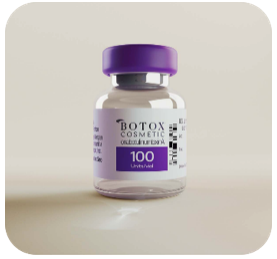
Remember, there is NO “GENERIC” BOTOX® COSMETIC. Be wary of discount products or “cheap” BOTOX® Cosmetic. Medical formulations, potency, and approved doses vary among products, so no one product can take the place of another.
FDA labeling states that BOTOX® Cosmetic is not interchangeable with any other product. If it doesn’t say BOTOX® Cosmetic on the vial, then it isn’t BOTOX® Cosmetic.2 #SeetheVial

Dr. Rebecca Baxt, Board Certified Dermatologist
Select the Best Injector in the Tri-State Area
It matters who your injector is! Dr. Rebecca Baxt is a board-certified dermatologist who performs all injections. At BAXT CosMedical®, no other doctors, assistants, nurses, or providers with limited experience or understanding of the skin will do your injections.
Dr. Rebecca Baxt is an expert injector who has years of experience in injection technique. Combined with her skill and artistic eye, you can be assured of receiving the correct amount of fillers and/or BOTOX Cosmetic that will achieve your facial rejuvenation goals. We provide honest consultations and natural results.
Request to schedule your consultation by contacting us online or by calling 201-265-1300 today.
More Expert Advice From Dr. Rebecca Baxt
- “Who Can Legally Do BOTOX Injections”
- “What is Barbie Botox?”
- “Botox in a Bottle…Does it Work?”
- “Is BOTOX® Cosmetic Safe?”
1 Zhou C, Che Q, Zhao R, Wang H, Wa Q. Facial Overfilled Syndrome: A Narrative Clinical Review. Clin Cosmet Investig Dermatol. 2026 Apr 1;19:600459. doi: 10.2147/CCID.S600459. PMID: 41948082; PMCID: PMC13051189.
2 Allergan Aesthetics. “Response to Suspected Counterfeit Botox Reports.” Available at: https://news.allerganaesthetics.com/media/response-to-suspected-counterfeit-botox-reports