Can You Believe the Hype?
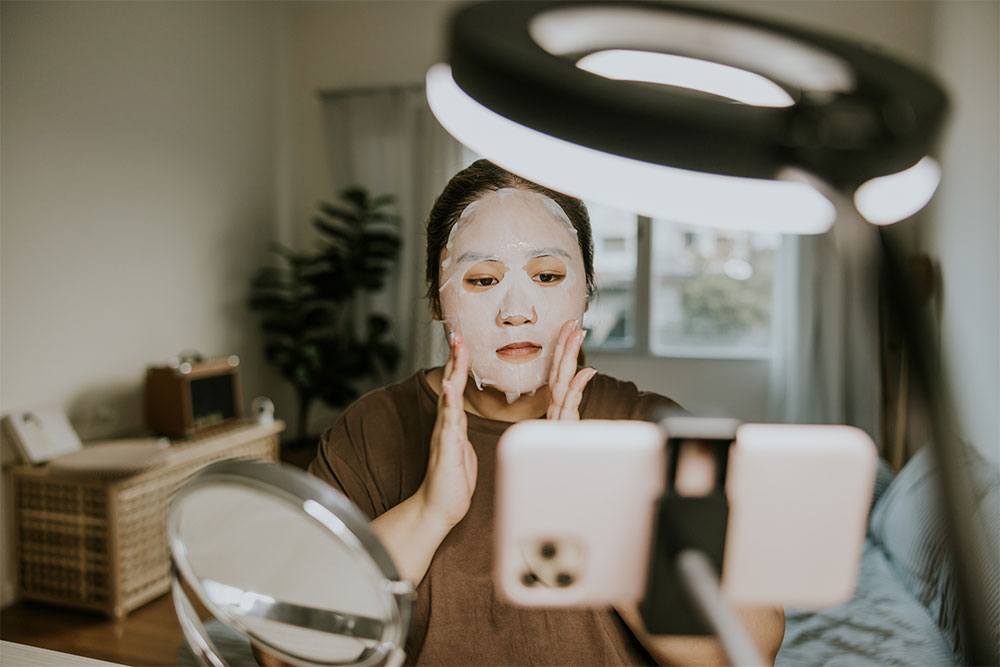
The growing popularity of trending skin care products and devices fueled by social media and influencers continues to grow. These viral trends are influencing how men and women care for their skin. In her medical dermatology and cosmetic practice in Paramus, NJ, Dr. Rebecca Baxt, a board-certified dermatologist, is frequently asked about trending social media skincare trends. Do the products work, do home skin care devices work, are they good for your skin, can they damage the skin or is there not enough research on their effectiveness? Learn more about Dr. Baxt’s research and her recommendations regarding the top five social media skin care trends of 2026.
Social media is playing an integral role in how many people care for their skin. Current popular trends include taking collagen powder, applying estrogen cream as a facial moisturizer or filler, using beef tallow as a moisturizer, trying at-home red light therapy devices, and using wrinkle patches, but do any of them actually work?
Dr. Rebecca Baxt will break down these five social media skincare trends, explaining their benefits for your skin and whether they’re truly effective or just hype.
1. Rating Collagen Powder as a Supplement: Not Recommended
The use of collagen powder as a supplement to improve the health of skin, hair, and nails is all the rage. People are adding it to their protein shakes, coffee, and other beverages. Since collagen is naturally produced by your body and is crucial to support health tissues, it is plausible to believe that consuming collagen supplements will produce benefits for helping with your anti-aging skin care goals. But are there conclusive scientific studies or evidence that supports this claim? According to Dr. Baxt, “No, it is a waste of time and money to consume collagen supplements.”
What can you do for your skin’s health? Dr. Rebecca Baxt recommends eating a healthy balanced diet, drinking water, not smoking, and applying sunscreen to help your skin to be healthy and vibrant.
2. Rating Estrogen Cream for the Face: Not Recommended
TikTok and Instagram users are raving about how estrogen-based creams, typically prescribed for vaginal dryness, can be used as a facial moisturizer and so-called “filler” to boost collagen and improve skin elasticity. Dr. Rebecca Baxt emphasizes that there are no FDA-approved estrogen creams for the face! Using topical vaginal estrogen cream on your face or neck is an “off-label” use and not a clinically supported practice.
3. Rating Beef Tallow as a Facial Moisturizer: Neutral
A popular trend is to apply beef tallow to the face to improve dry skin. This so-called “natural” product is rendered animal fat that is melted and purified for use on the skin. While it can be used for dry skin, there are other plant-based products, such as coconut oil that may be better for your face. Dr. Baxt advises, “Beef tallow is not for everyone…If you have allergies or acne prone skin you should not apply beef tallow to your skin.”
4. Rating Whether Wrinkle Patches Actually Work: Recommended
Facial patches, also known as wrinkle patches, are non-invasive, adhesive, or silicone masks that are designed to be used for 15 to 30 minutes or overnight treatments. The overnight reusable or disposable silicone patch can be used to temporarily physically smooth wrinkles and relax facial tension. Dr. Rebecca Baxt finds the overnight silicone patches to be helpful in smoothing out sleep lines and bring a quick brightening boost to the face. In fact, after assessing their effectiveness and safety, Dr. Baxt added the disposable silicone patch to her skin care routine.
5. Evaluation of Red-Light Therapy Masks: Medical-Grade Light‑Source Treatments Recommended
During her skin care consultations, the number one question Dr. Rebecca Baxt is asked is: do red light masks work? The answer is yes, but with a caveat!
In-office medical light devices (IPL, BBL, photofacial) are highly effective at stimulating collagen and addressing a variety of facial concerns. Red light masks sold for home-use are not as strong and do not produce the same results as medical-grade light source devices. Dr. Rebecca Baxt highly recommends medical light source devices to cosmetically improve age-related and environmental skin conditions. Skin concerns, such as wrinkles and lines, sunspots, dry, dull, and leathery skin, hyperpigmentation, acne and acne scars, loss of skin elasticity (skin tightening), acne, and other medical skin conditions can be improved with medical-grade light source treatments.
Do you Need Expert Advice about Your Skin Care Routine and Products?

Don’t rely on social media trends and influencers when it comes to the health of your skin!
Learn how Dr. Rebecca Baxt can help you achieve healthy and vibrant skin.
Request your consultation appointment at Dr. Baxt’s cosmetic and medical dermatology office in Paramus, NJ. Visit us for a customized skin care consultation and learn what program and products are safe and effective.
Related Articles