Dr. Rebecca Baxt, a board-certified dermatologist, explains that Photofacial is another term for Intense Pulsed Light (IPL) or Broad Band Light (BBL) cosmetic medical devices. These Photorejuvenation devices are high-level many wavelengths of visible light that is shined on the face. The customized treatments help to reduce redness and flushing and blushing from rosacea, reduces brown spots from sun damage, and are an anti-aging program as the treatments stimulate collagen production.
Medical Photofacial treatments are similar to the at-home red light masks that have become popular and are commonly used but with one major exception. Medical office-based Photofacial devices are thousands of times more powerful and highly effective! (Read “Top 5 Social Medical Skin Care Trends” to learn more.)
Photofacial is an exciting treatment program that Dr. Baxt has successfully used for many years in her Bergen County, NJ cosmetic and medical dermatology practice to dramatically reduce the signs of sun damage, aging, and rosacea, on the face and neck. Great results are also seen on the arms and chest.

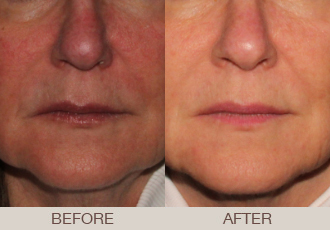
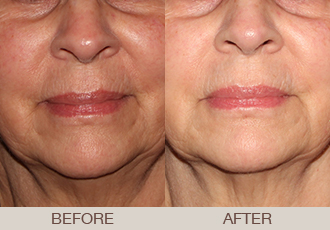
Results may vary and are not guaranteed.
What Conditions does Photofacial Treat?
Dr. Rebecca Baxt, Medical Director of BAXT CosMedical® located in Paramus, NJ, uses Photofacial to treat a variety of skin conditions. Some of the common medical dermatologic conditions and anti-aging skin concerns are:
- Rosacea (redness & flushing)
- Hyperpigmentation (brown spots)
- Sun damaged skin
Photofacials are an especially effective treatment option for individuals dealing with rosacea. By using Intense Pulsed Light (IPL) technology, Dr. Rebecca Baxt can dramatically improve the appearance of sun-damaged skin and reduce the persistent redness and flushing commonly associated with rosacea.
Photofacial Treatment Recommendations
Photofacial
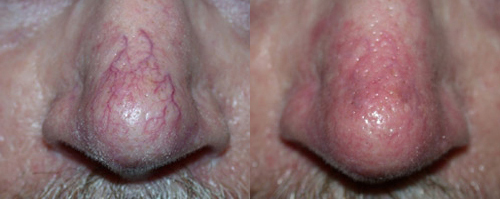
*Actual patients. Results may vary and are not guaranteed.
View More Before & After Photos
Dr. Rebecca Baxt typically recommends a series of five treatments in a row once a month to achieve optimal results. After completing the initial series, most patients benefit from two to four maintenance sessions per year, depending on their skin condition and cosmetic goals. Every treatment plan is customized to address the patient’s unique concerns and desired outcomes.
Photofacials are a reliable, well-established treatment. Dr. Baxt frequently sees long-term photofacial patients whose skin appears lifted and rejuvenated, often giving the impression of a facelift, despite never having undergone surgery.
Photofacial treatments are most effective for fair-skinned individuals. They are not suitable for patients with tan or dark skin, as the technology targets pigment in a way that can cause complications for deeper skin tones.
Photofacial Recovery and Downtime
Photofacial treatments involve no downtime, unlike laser resurfacing or deep chemical peels. Each session takes about 30 minutes, and any mild redness typically fades by the time you return to your car.
Treatments are generally scheduled every four to six weeks. After completing five Photofacial sessions, many patients are so pleased with their results that they elect to continue with additional treatments. Others prefer a maintenance schedule of one to four sessions per year once their initial series is complete.
Request Your Appointment at BAXT CosMedical® Today
Schedule your consultation with Dr. Rebecca Baxt to discuss your anti-aging and facial rejuvenation goals. Trust your facial renewal to the BAXT CosMedical® experts!
Request your consultation online or by calling 201-265-1300 today.
Related Articles
Let our family treat your family, a legacy you can trust!
Rebecca Baxt, M.D., M.B.A, F.A.A.D.
Cosmetic And Medical Dermatology Office Located in Paramus, NJ (serving Bergen County, NJ communities)